Abridge’s clinical note
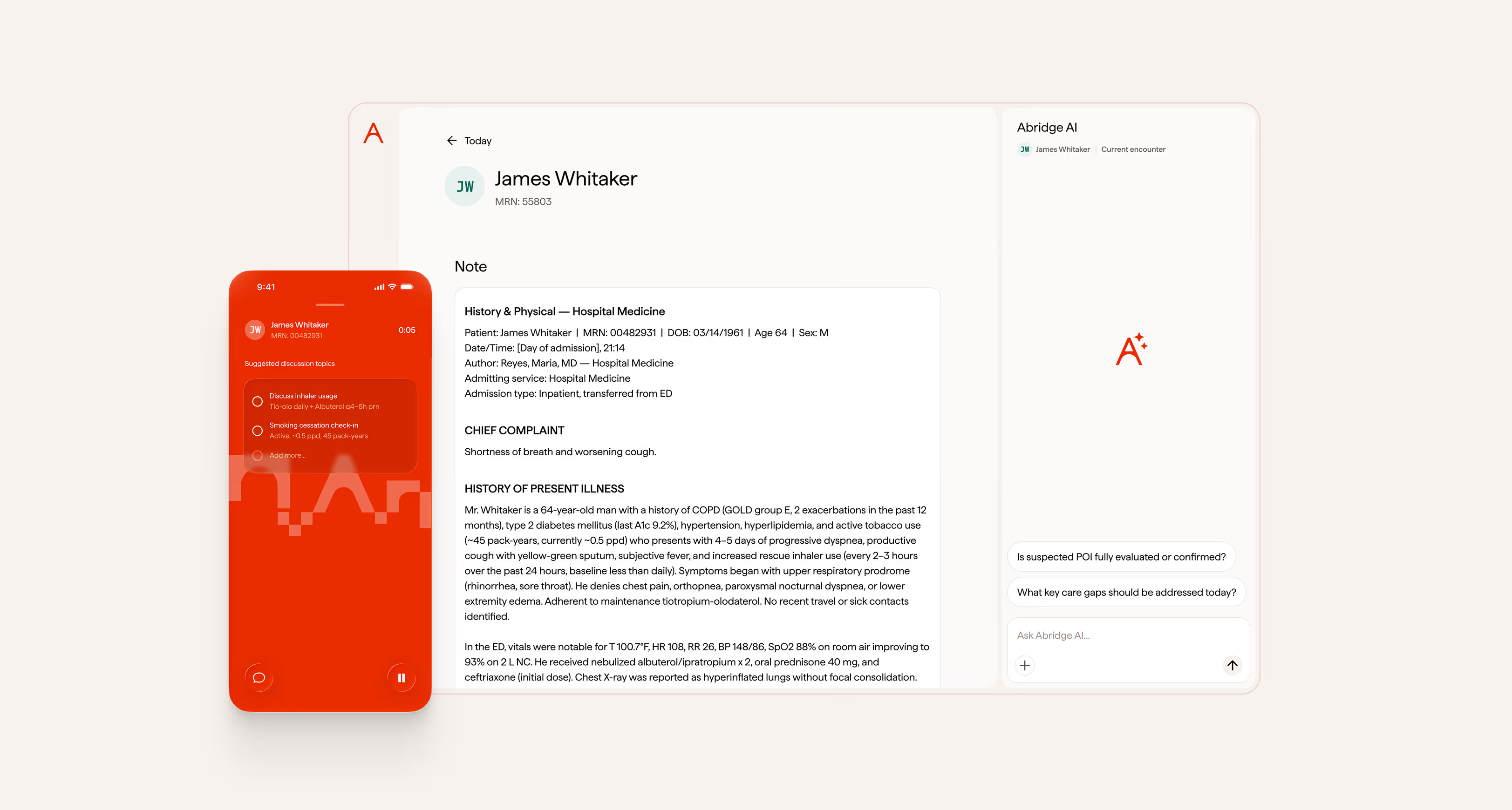
The AI has done the writing. The doctor still has to do the reading. This is the note shown on Abridge’s clinician page.
 Human Rounds
AI interviews patients before the visit, reads handwritten referral orders from a photo, judges urgency, and writes to the health record. The care team walks in prepared. Live today in a real public hospital. Free to run, open to inspect.
The AI has done the writing. The doctor still has to do the reading. This is the note shown on Abridge’s clinician page.

Relevant history, clear trends, and what needs attention. A design concept with fictional data; clinical-history graphs are on our roadmap.
An AI-native medical platform for emerging markets. Build around the care people need today, with today’s technology.
Established systems have decades of software, billing workflows, and integration requirements to accommodate. Health systems building their digital foundations have a chance to take a different path.
Open source. Adaptable to local systems. Clinicians in control. Less legacy to inherit, with privacy, clinical validation, and local requirements built into the work.
Human Rounds automates the repetitive work before, during, and after each visit. Your existing medical record remains the source of truth — clinicians review every recommendation.
Patients describe their problem in their own words. AI asks follow-up questions, estimates urgency, and places the patient in the right queue.
The consultation is summarized automatically. Prescriptions, referrals, lab orders, and follow-up instructions are generated for clinician review.
Not started yet
Identity, coverage and record systems beyond Argentina
Prototype ready, pending Human Rounds review
The dictated interview arrives structured: SOAP note, ranked differential, draft orders and prescriptions to review
The patient dictates symptoms and answers follow-ups
DNI + insurance credential scan fills the health-record registration
With deterministic red-flag rules the model can escalate but never downgrade
To the electronic system or the printer
Running at the Pinamar reference installation
Even handwriting; staff approve, the AI proposes
Writes to the national EHR with automatic retry; nothing breaks if the record is down
The patient’s insurance is detected automatically from the national registry
A freed slot is re-offered automatically to the next patient
Real slots, nearest first, held while you decide
Search with stemming across the hospital and 7 health centres
Alternative slots or a re-upload link, never a dead end
Reply YES or NO to confirm or cancel
On the site and on WhatsApp
Sign up with a photo of your DNI
Request queue, today’s patients, doctor agendas, capacity and billing-recovery reports
Data packs, languages, installer wizard, pluggable per-country connectors
Clinical summary concept. A new homepage section compares today’s note-heavy AI clinical notes with our design direction for a clearer summary — icons, flags, and combined trend charts — a concept built on fictional data, not yet in the product.
Readable network labels. Labels on the “Your health network” illustration were too small and faded to read; they’re now larger and clearer, and any that fade out are hidden instead of left illegible.
QR pre-consult interview. Scan the code at the consulting-room door and the AI interview starts on the patient’s own phone, ready for the doctor before the encounter.
Scan-to-register. A document camera reads an ID and insurance credential, fills the health record, and learns unfamiliar QR formats for the next patient.
Resilient EHR handoff. Registration work stays queued locally and retries automatically when the clinical record comes back online.
Booking, reminders, coverage checks and documentation stop being manual work. No licence fee, no vendor lock — you host it, you own the data.
Funding goes to hardening, independent clinical validation and the next public pilots. Because the platform is free to run, the same grant reaches more clinics.